

Culture Becomes More Valuable in an AI World
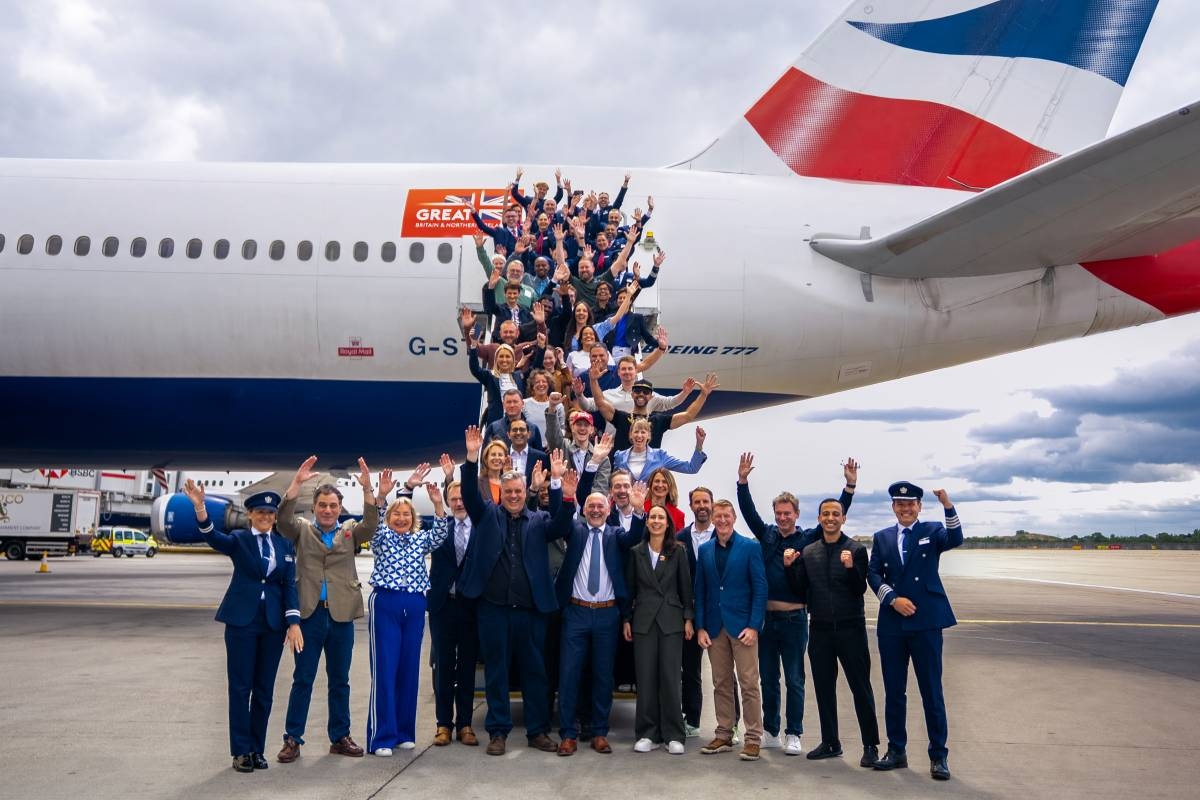
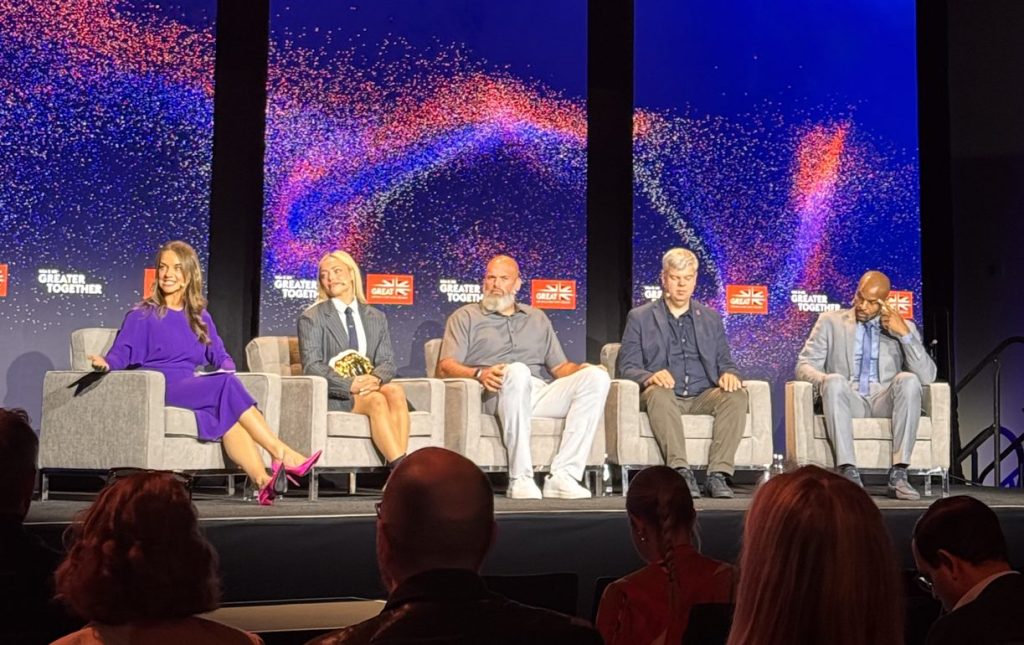
Last week, I was honoured to be invited to join the largest US/UK trade delegation to date — a highly curated group assembled by the British government and Consulate to represent some of the UK’s leading founders, investors, executives, artists, and cultural figures operating globally.
As a Canadian who built and sold my first company in Britain before eventually moving to Los Angeles, it was a particularly meaningful experience personally. Over the years, I’ve become closely involved with the broader UK/US business ecosystem around media, consumer, entertainment, and cultural exports — and what struck me most throughout the week was how dramatically the role of consumer and culture has changed.
These categories are no longer viewed simply as entertainment, branding, or “consumer.” They are increasingly being recognized as some of the most powerful forms of modern economic infrastructure and geopolitical influence.
Increasingly, the world’s most powerful consumer businesses are being built exactly at that intersection — where identity, media, celebrity, commerce, community, and AI all converge into modern distribution systems.
One comment in particular stayed with me.
Bank of America CFO Alastair Borthwick noted that roughly 70% of the US economy is driven by consumer spending. Consumer spend in 2025 was up approximately 4.5% year-over-year, and this year is apparently already tracking closer to 7% despite not even being halfway through.
His conclusion: “Something is going on with the American consumer.”
At the same time, almost every conversation at the event revolved around AI.
Not just AI infrastructure, but agentic AI, creative AI, AI-generated content, and the increasingly blurred line between machine-generated and human-generated experiences.
I left the week convinced that the market may be massively underestimating the next phase of consumer.
Consumer Is Bigger Than Venture Treats It
For years, venture capital has largely treated consumer as secondary to software and infrastructure.
Software was viewed as scalable. Defensible. Important.
Consumer was often dismissed as:
- cyclical
- trend-driven
- less defensible
- overly dependent on branding and marketing
And yet consumer spending still drives roughly 70% of US GDP.
Meanwhile, the platforms shaping modern consumer behavior have quietly become some of the largest distribution systems ever created.
Today, YouTube reaches roughly 2.5 billion monthly users — more than seven times the population of the United States. TikTok reaches over 1 billion users globally, while YouTube Shorts alone generates approximately 200 billion daily views.
These are no longer “social media platforms.”
They are global distribution infrastructure.
And increasingly, the most valuable modern consumer companies are being built on top of them.
AI Will Create Infinite Sameness
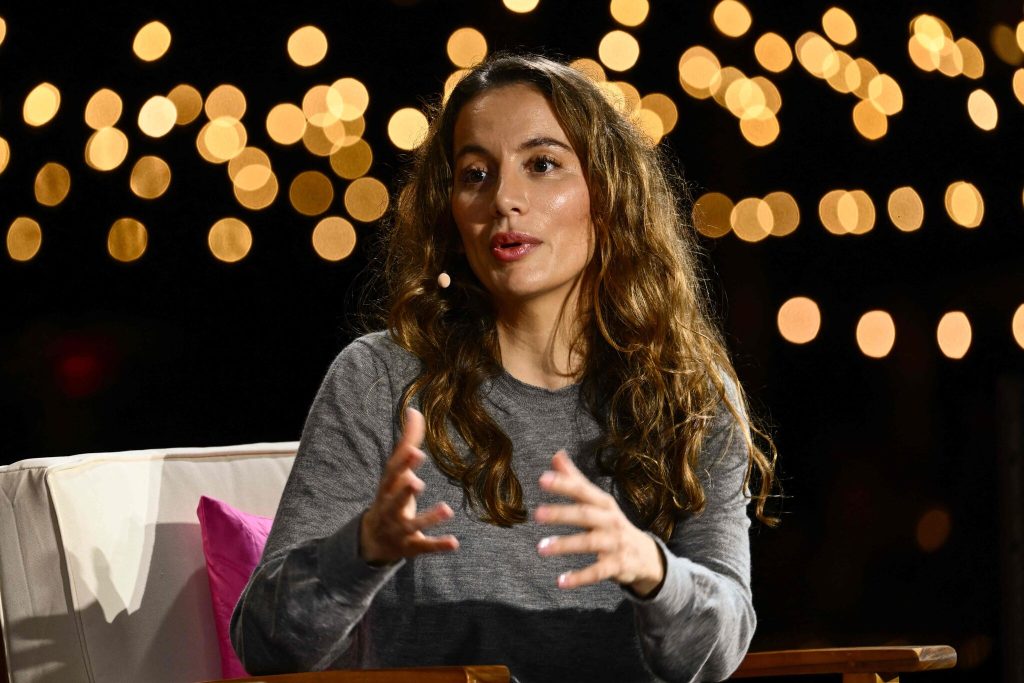
Former OpenAI CTO Mira Murati spoke extensively about the future of humanistic agentic AI — systems capable of generating content, interaction, decision-making, and eventually entire digital experiences autonomously.
The implication is obvious: The cost of creation is collapsing.
AI can already generate:
- music
- copy
- video
- products
- code
- design
- content at effectively infinite scale
Which means the internet is about to become flooded with increasingly competent, increasingly optimized, increasingly similar output.
And that changes the value equation completely.
Because when content becomes infinite, the scarce asset becomes something else entirely:
Taste. Identity. Trust. Emotion. Community. Human connection.
In other words: culture.
The Scarcity Premium on Human Creativity

One of the most interesting moments from the week came from Sir Lucian Grainge, Chairman of Universal Music.
He made the point that AI can generate endless music — more songs, more sounds, more content than ever before. But eventually much of it converges into the same emotional frequency. The same familiarity. The same optimized middle.
What it cannot do is create the thing that “lights your skin on fire.”
Simon Cowell made a similar observation in a different way: AI may become an extraordinary tool, but human beings are still the ones who create magic.
That idea matters enormously.
Because the next generation of iconic companies will likely not just be the ones with the best technology.
They’ll be the ones that create:
- obsession
- identity
- fandom
- belonging
- emotional resonance at scale
And increasingly, those businesses will sit at the intersection of:
- celebrity
- media
- commerce
- AI
- infrastructure
- community

Why Consumer May Be the Most Mispriced Category in Venture
This is where I think the market disconnect becomes really interesting.
While an enormous amount of venture capital continues flowing toward pure AI infrastructure and developer tooling, some of the largest real-world economic outcomes are increasingly emerging from culturally-native consumer platforms.
What’s particularly interesting is that celebrity-driven businesses have historically scaled approximately 20% faster to liquidity outcomes, and achieved exits roughly 20% larger than non-celebrity peers.
That makes intuitive sense.
Embedded distribution changes everything:
- customer acquisition
- trust
- speed of adoption
- international expansion
- media efficiency
And unlike previous generations of consumer businesses, modern consumer platforms are increasingly combining:
- global distribution
- AI-enabled personalization
- owned communities
- vertically integrated supply chains
- recurring engagement loops
In other words, consumer companies are no longer behaving like traditional brands.
They are behaving more like ecosystems.
Consumer Is Becoming Infrastructure
The biggest shift we’re seeing at Sandbox Studios is that the strongest consumer businesses increasingly resemble infrastructure layers rather than standalone products.
Communities become distribution engines.
Celebrity becomes embedded audience ownership.
Products become ecosystems.
AI becomes a layer amplifying personalization, engagement, and retention.
Supply chains become strategic assets rather than operational functions.
This is also why the lines between categories are starting to blur:
- media companies becoming commerce companies
- consumer brands becoming platforms
- creators becoming infrastructure
- celebrity ecosystems becoming global businesses
And importantly, they are scaling globally faster than previous generations of consumer companies ever could.

The Next Decade of Venture May Look Very Different
For years, consumer has been treated as secondary to “real technology.”
I increasingly think that distinction is collapsing.
AI may commoditize creation.
But it amplifies the value of:
- trust
- distribution
- taste
- identity
- emotional connection
The future may not belong solely to companies that can build technology.
It may belong to the companies that can make people care.
And in a world increasingly flooded with infinite AI-generated sameness, culture itself may become one of the most valuable assets on earth.
We’re already seeing early signals of this across the Sandbox Studios portfolio. Fund II currently has four active investments and is marked at approximately 1.4x despite still being less than six months into deployment.
That doesn’t happen by accident.
It happens when culture, distribution, timing, and infrastructure begin converging at the same moment.